Emancipation | Pretty Danged Important SAT Vocabulary
Americans will know of the Emancipation Proclamation. Let's be sure we know exactly what this means.
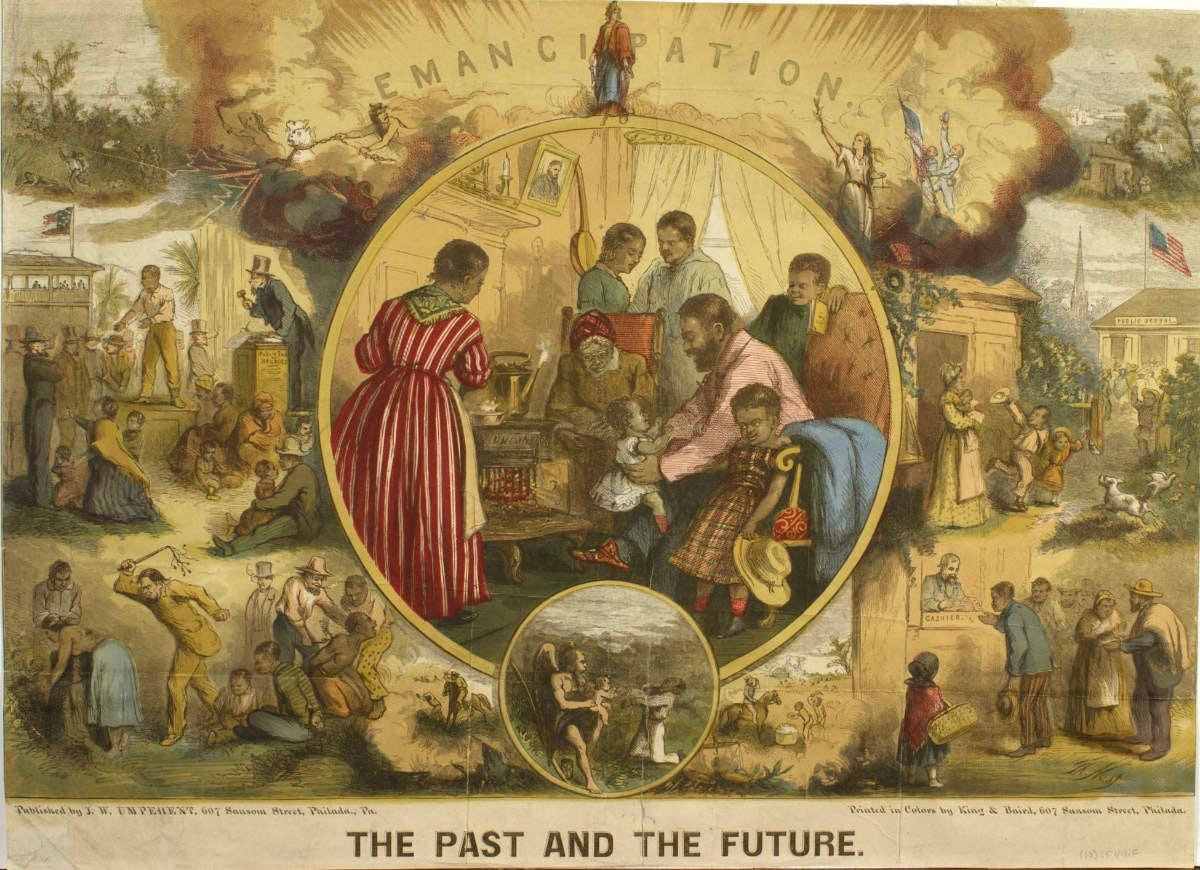
It’s hard for Americans to think about the word emancipation without thinking about the Emancipation Proclamation. In class as a teacher, I would frequently use this as an example of the word and ask my students what the Emancipation Proclamation was. Most of my students would say, Oh, that’s the one that freed the enslaved people. Bingo! More specifically, though, it was an executive order issued by Abraham Lincoln during the Civil War that changed the status of the enslaved people in the Confederate states to legally free, though at the end of the day it was merely a legal order, and it was up to enslavers to follow it.
So to emancipate is to give liberty to, and emancipation is the noun form. Let’s learn a little more.
📚️ Definition of Emancipation
Emancipation (noun): The act of freeing someone from legal, social, or political restraint, control, or oppression. Example: The emancipation of enslaved people was a turning point in American history.
🗣️ Pronunciation of Emancipation
IPA: /ɪˌmæn.sɪˈpeɪ.ʃən/ (See IPA key)
Respelling: ih-man-sih-PAY-shun
📰 Examples of Emancipation
Here are some examples of the word emancipation:
The Emancipation Proclamation of 1863 declared that all enslaved people in Confederate states “shall be then, thenceforward, and forever free.”
Children from dysfunctional families sometimes seek legal emancipation from their parents.
The suffragette movement fought for women’s emancipation, seeking equal rights in voting, education, and employment, most notably from the late 1800s to the early 1900s.