
Homogeneity — Keystone SAT Vocabulary
⚡️⚡️⚡️ Test yourself! HOMOGENEITY most nearly means: A) destitution; B) incrimination; C) uniformity; D) solidity. Answer inside.
The concept of homogeneity comes up frequently in biology, culture, design, and critical thinking — which is exactly why the SAT loves it.
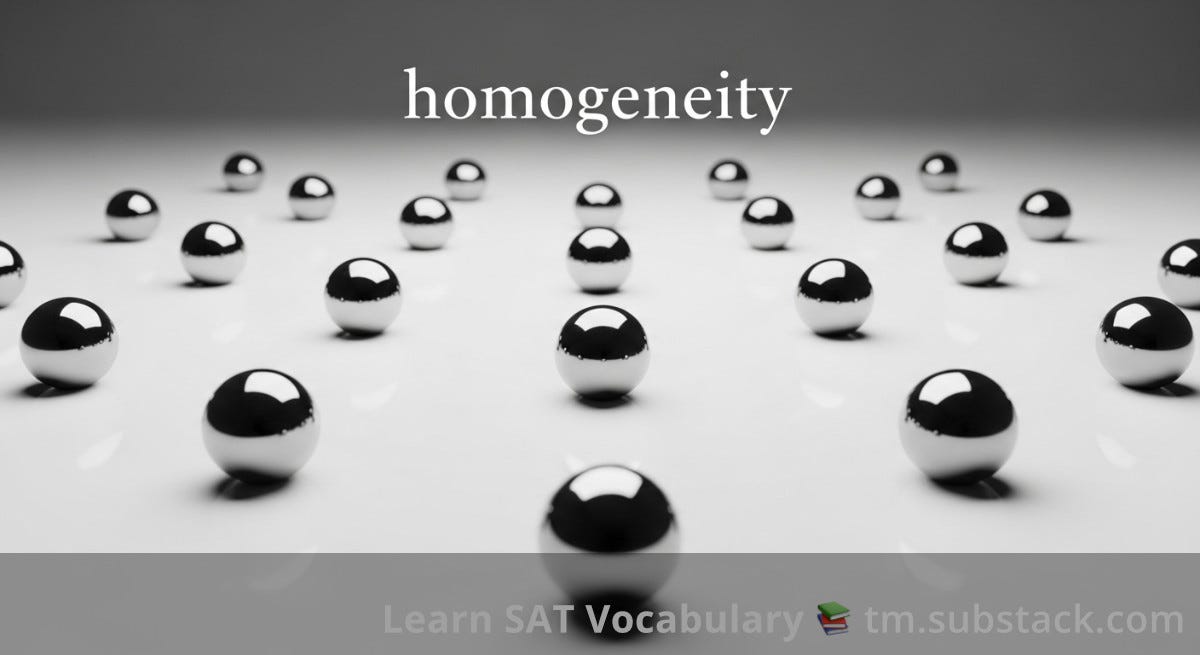
📚️ Definition of Homogeneity
Homogeneity (noun): The quality or state of being all the same or very similar in kind; uniformity in structure, composition, or character throughout a group or substance. Example: the homogeneity of suburban architecture.
🗣️ Pronunciation of Homogeneity
IPA: /ˌhoʊ.mə.dʒəˈniː.ə.ti/ (See IPA key)
Respelling: hoh-muh-juh-NEE-uh-tee
📰 Examples of Homogeneity
Here are some examples of the word homogeneity:
The homogeneity of chain hotel breakfast food would actually be funny if you didn’t have to suffer through conveyor belt pancakes and watered down orange juice every single time.
Geneticists have noted the alarming homogeneity of the cheetah population; their genetic variation is so low that they are uniquely vulnerable to disease.
🎨 Vocab Card
For paid subscribers, I offer a custom image to help remember the word. You can see myriad examples of the graphics I make to illustrate the words in the archives.
The quiz again:
HOMOGENEITY most nearly means:
A) destitution
B) incrimination
C) uniformity <= This one!
D) solidity
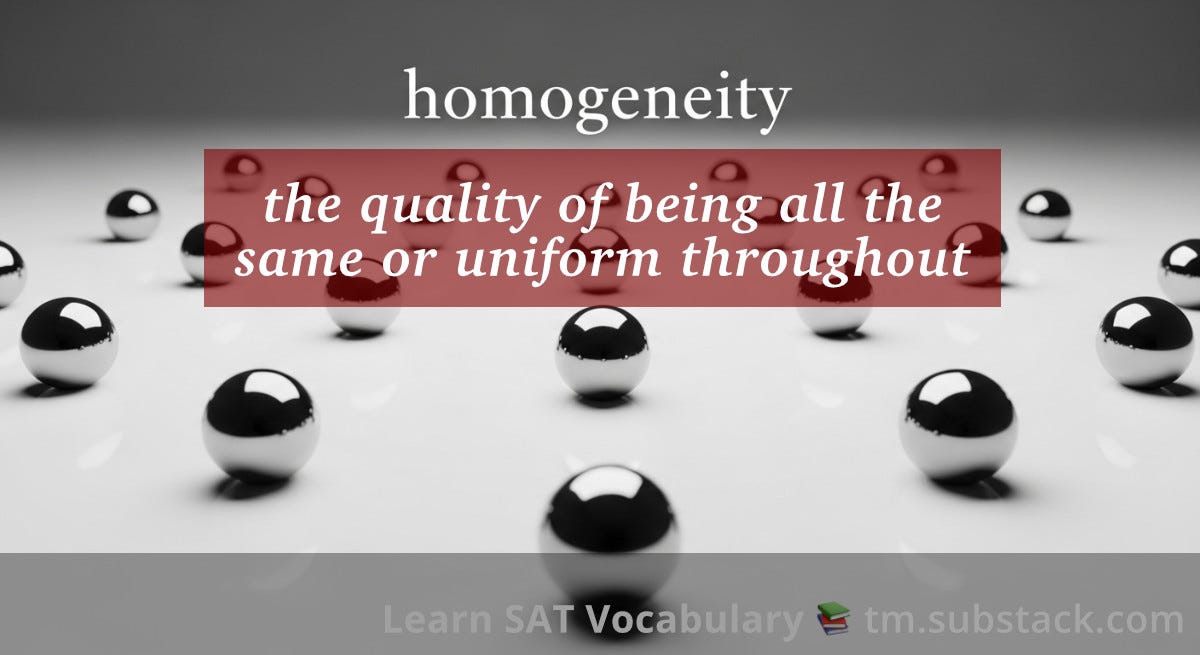
🧠 Summary of Homogeneity
Definition: Homogeneity means the quality of being all the same or uniform throughout — a lack of variety or difference within a group, substance, or system.
Real-world connection: You will encounter homogeneity everywhere, from cookie-cutter strip malls to algorithm-driven social media feeds that show you the same type of content over and over just because you accidentally clicked on that one reel that one time.
SAT relevance: Homogeneity frequently appears in science and social studies passages on the SAT, especially in discussions about biodiversity, cultural diversity, or experimental design. It could show up as a vocabulary-in-context question or within a passage about ecology, sociology, or history.