
🔨 Iconoclasm — SAT Vocabulary That Breaks With Convention
ICONOCLASM most nearly means: A) conformity; B) reverence; C) nostalgia; D) dissent. Answer inside. 👉️
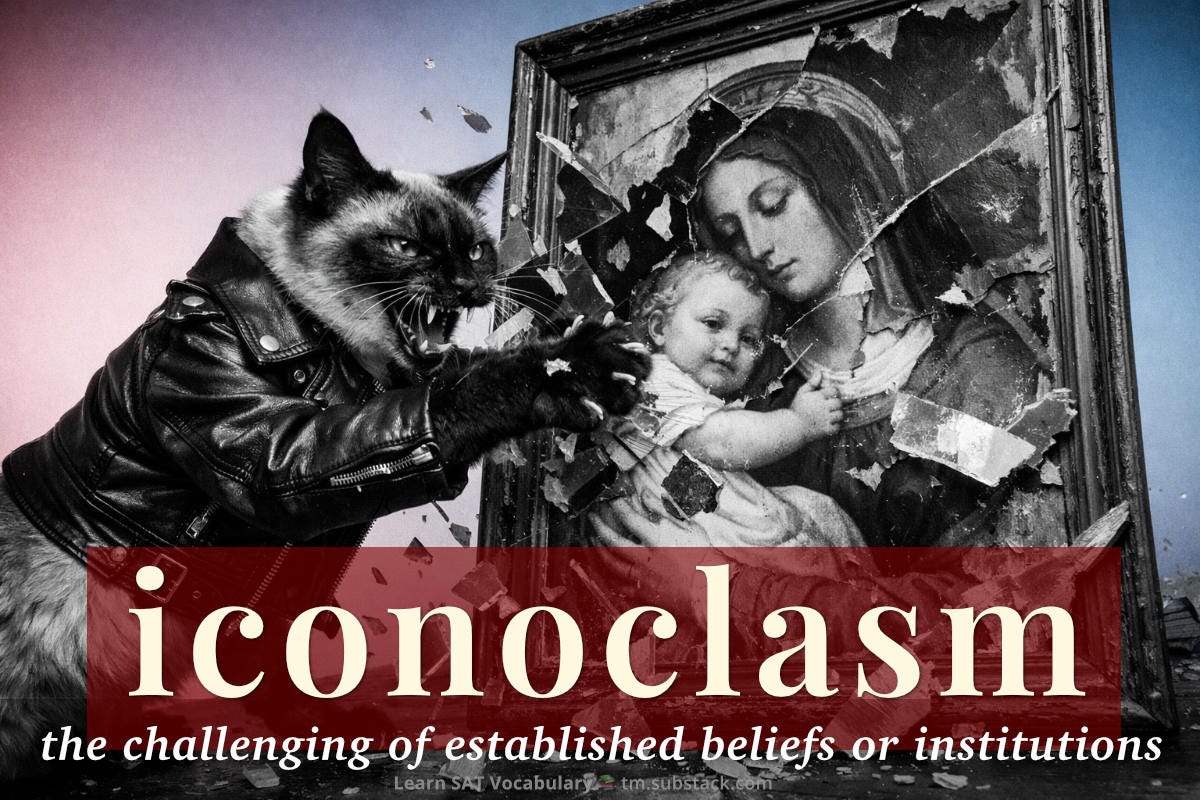
'Icon' means image or idol, and '-clasm' comes from the Greek klásma, meaning 'breaking'. So iconoclasm is literally icon-breaking, i.e., smashing the things everyone else puts on a pedestal. A person who practices iconoclasm is called an iconoclast.
📚️ Definition of Iconoclasm
Iconoclasm (noun): The action or practice of attacking, challenging, or overthrowing widely accepted beliefs, traditions, or established institutions. Originally referred to the literal destruction of religious images or icons. Example: the writer’s iconoclasmshocked many more conservative readers.
🗣️ Pronunciation of Iconoclasm
IPA: /aɪˈkɒn.ə.klæz.əm/ (See IPA key)
Respelling: eye-KON-uh-klaz-uhm
📰 Examples of Iconoclasm
Here are some examples of the word iconoclasm:
The art museum’s exhibit celebrated artistic iconoclasm, showcasing emerging artists that broke every rule of classical painting.
The iconoclasm of the Impressionists eventually transformed the entire trajectory of Western art and became some of the most recognizable art in popular culture.
The healthy kind of iconoclasm does not consist in smashing idols so much as in putting them in their proper place.
Quiz answer: D, dissent.

🧠 Summary of Iconoclasm
Definition: Iconoclasm means the challenging or overthrowing of established beliefs, traditions, or institutions.
Examples: Famous instances include the Impressionist revolt against academic painting, the scientific revolution’s challenge to geocentrism, and punk rock’s rejection of musical convention.
Real-world connection: Startup founders disrupting entire industries (like taxis or bookstores) and even people with various tattoos and piercings could be seen as iconoclastic, though nowadays, nobody looks twice at someone with a nose ring and purple hair.
SAT relevance: Iconoclasm (and its companion form iconoclast) frequently appears in advanced reading passages about history, art, and social change. It could also show up as a vocabulary-in-context question or in answer choices describing an author’s tone or purpose.