
Obfuscation | An SAT Vocab Word That We Will Make Clear
Challenge yourself! Obfuscation most nearly means making something: A) scary; B) interesting; C) smaller; D) hard to understand.
I remember seeing a t-shirt that stated Eschew obfuscation. I knew it was supposed to be funny, but I didn’t get it. It took a good dictionary and a few minutes to understand the joke.
Let’s learn more about the second word in the funny command.
📚️ Definition of Obfuscation
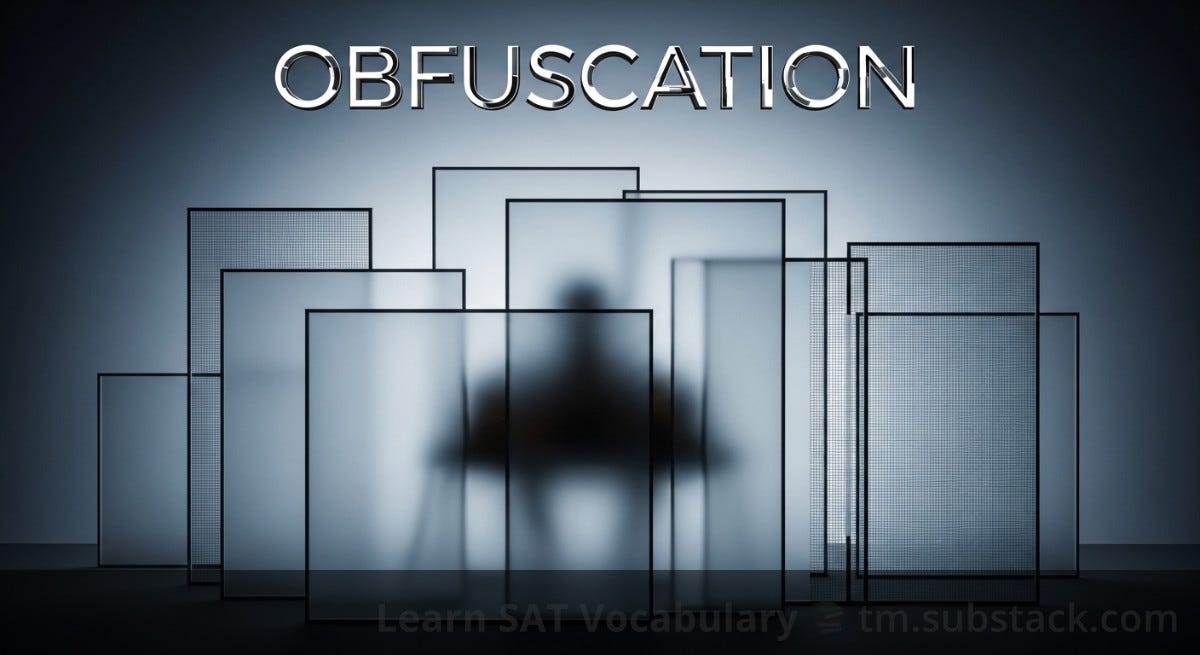
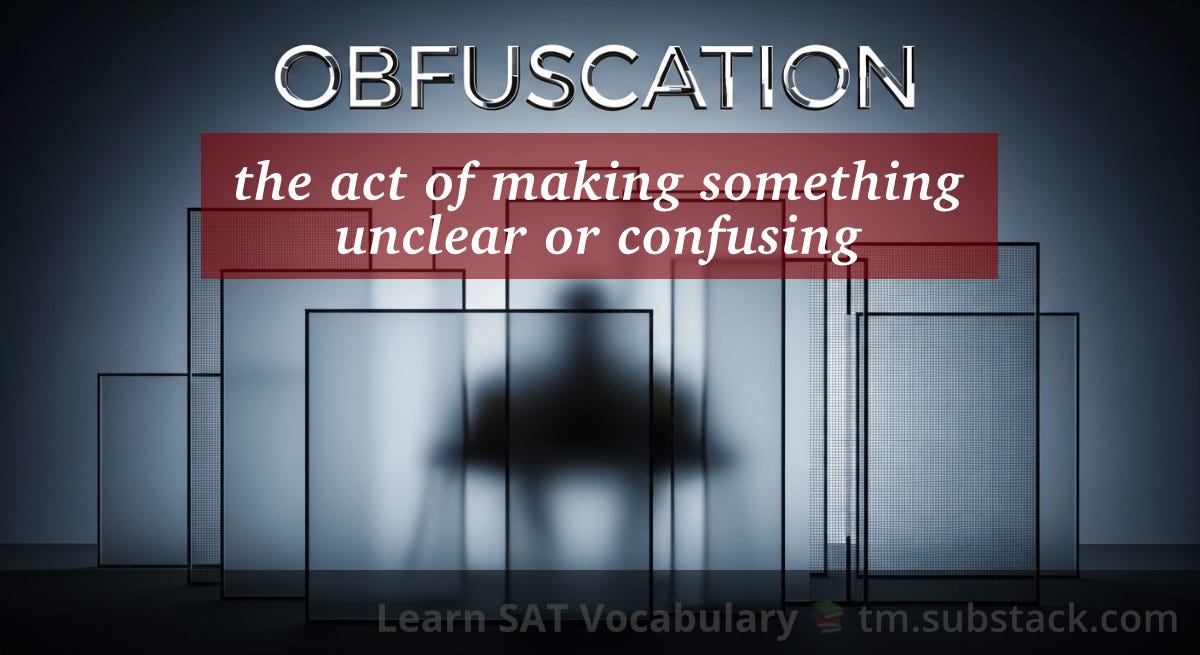
Obfuscation (noun): The act of making something deliberately unclear, confusing, or difficult to understand, often in order to conceal the truth or prevent others from grasping the real meaning. Example: the testimony was full of obfuscation.
🗣️ Pronunciation of Obfuscation
IPA: /ˌɑb.fəˈskeɪ.ʃən/ (See IPA key)
Respelling: ahb-fuh-SKAY-shun
📰 Examples of Obfuscation
Here are some examples of the word obfuscation:
The app’s privacy policy was a textbook example of obfuscation—it took me 112 swipes to get to the end. I don’t even think the lawyers read the whole thing.
During the notorious Enron scandal, executives relied on financial obfuscation to hide billions in debt inside complex off-the-books partnerships.
On obfuscation: “Political language is designed to make lies sound truthful and murder respectable, and to give an appearance of solidity to pure wind.” — George Orwell, “Politics and the English Language” (1946)
For the quiz, the best choice is: D.
🎨 Vocab Card
For paid subscribers, I offer a custom image to help remember the word. You can see myriad examples of the graphics I make to illustrate the words in the archives.
🧠 Summary of Obfuscation
Definition: Obfuscation is the act of deliberately making something unclear, confusing, or hard to understand, typically to hide the truth or mislead an audience.
Real-world connection: You encounter obfuscation constantly — in dense legal contracts, intentionally ambiguous corporate statements, over-complicated jargon, and any situation where someone uses complexity to hide truths.
SAT relevance: Obfuscation could appear in vocabulary-in-context questions, particularly in passages about rhetoric, media, science communication, or law. Understanding this word also sharpens your ability to analyze an author’s purpose and tone, all key skills for the reading section.
All done! Thank you for supporting my work. 🙏