
Indices: Definition & Meaning for the SAT
⚡️ INDICES most nearly means: (A) accusations; (B) clues; (C) summaries; (D) indicators. 👉 Answer + examples, pronunciation, and explanation inside.

📣 TL;DR: Indices is the plural form of the word INDEX, meaning reference lists or numerical indicators. Be careful with irregular plurals and verbs! Many a student has missed a point because they didn't realize the irregular form of a word was related to the dictionary form, for example, arisen is the past participle of arise, which itself is close to the word rise.
ℹ️ Part of Speech of Indices
indices is a NOUN (irregular plural; indexes is the regular plural; both are accepted).
🗣️ Pronunciation of Indices
indices is pronounced /ˈɪn.dɪ.siːz/ or IN-dih-seez.
📚️ Definition of Indices
The plural form of index, referring to alphabetical reference lists at the end of books, or numerical indicators that measure and track changes in data, statistics, or market values. Example: check various financial indices before making a decision.
📰 Examples of Indices
Here are some examples of the word indices:
The econ textbook included several indices in the appendix, making it easy to find specific topics like inflation rates and GDP calculations.
Weather stations use various indices to predict storm severity, including wind speed measurements, barometric pressure, and humidity levels.
Consumer confidence indices are leading indicators of economic health. 📈
🧠 Good to know
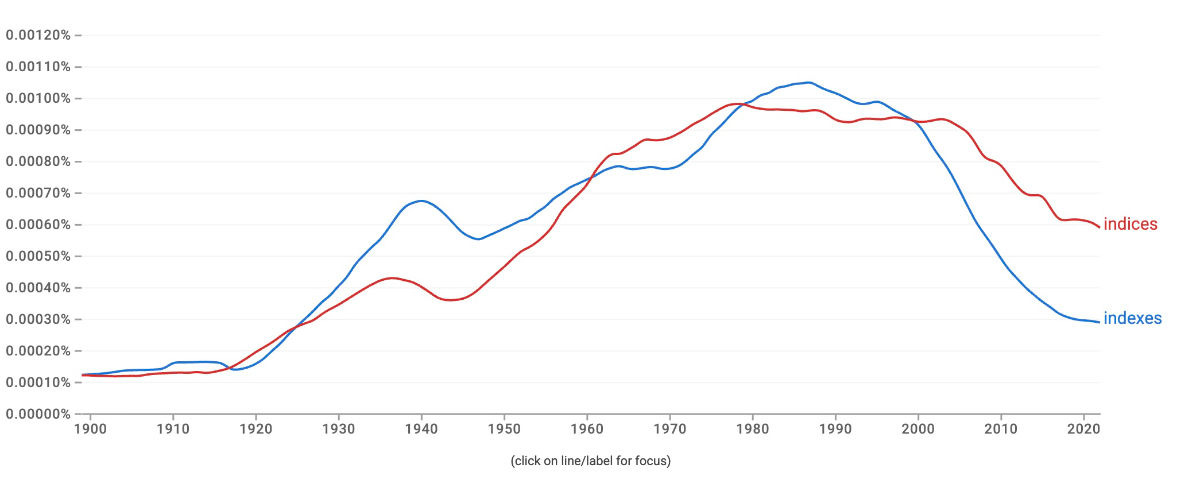
Both plural forms, indices and indexes are accepted. Over time, the irregular form will likely because less used, though, as languages generally tend to simplify and regularize over time.
Here’s a comparison of the usage of both; you can see that indices is still the more common form:
✅ Quiz answer
Answer to the question above:
D, indicators. Explanations: A doesn't work; accusations would be charges or allegations. B could be clues or hints, but that's not what indices means. C doesn't work; summaries are brief overviews, not reference points or measurements.